ADHD and Procrastination: Why Is It So Hard to Get Started?
You know what you need to do.
The email needs replying to. The form needs completing. The washing needs putting away. There’s a piece of work you’ve been thinking about for three days that would probably take about 30 minutes if you actually sat down and did it.
And yet… you don’t start.
Instead, you think about starting. You remind yourself that you really should start. You might even become increasingly stressed about the fact that you haven’t started.
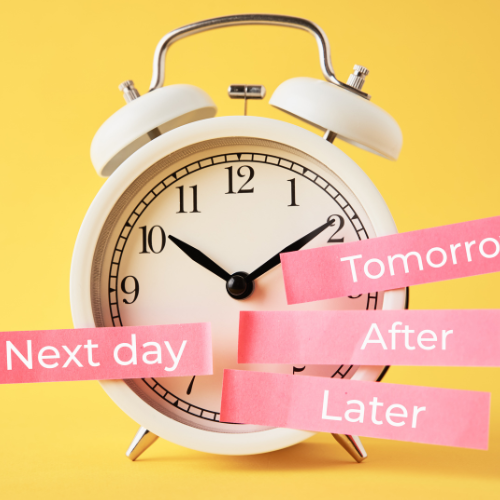
Then suddenly the deadline is tomorrow — or possibly in 45 minutes — and something changes.
You can do it.
Sometimes remarkably quickly.
If you have ADHD, this frustrating gap between knowing what you need to do and actually being able to get started may feel very familiar.
It’s often described as ADHD procrastination, task initiation difficulty or sometimes ADHD paralysis. And while everyone procrastinates occasionally, for some adults with ADHD it can become a repeated pattern that affects work, home life, confidence and stress levels.
So why does it happen?
ADHD procrastination isn’t always about not wanting to do something
We tend to think of procrastination as a fairly simple choice:
“I don’t fancy doing that now, so I’ll do it later.”
But ADHD procrastination can feel very different.
You may genuinely want to do the task.
You might understand exactly why it matters.
You may even spend more time worrying about not doing it than the task itself would have taken.
That’s an important distinction.
ADHD can affect executive functions — the mental processes involved in things such as planning, organising, maintaining attention, managing competing information and moving from intention into action.
The NHS includes difficulties with organising time, following instructions and completing tasks among the experiences commonly associated with adult ADHD. Research also increasingly supports an association between ADHD symptoms and procrastination, with executive functioning, emotional regulation and motivational processes all appearing to play a part.
So sometimes the problem isn’t:
“I don’t care enough to do it.”
It’s closer to:
“My brain isn’t quite engaging with this task yet.”
Why can starting a task feel harder with ADHD?
One of the confusing things about ADHD is inconsistency.
You might struggle for an hour to begin a straightforward piece of admin, yet spend four hours completely absorbed in something that interests you.
That can understandably lead to thoughts such as:
“Why can I do that, but not this?”
“Maybe I’m just lazy.”
“I clearly can concentrate when I want to.”
But ADHD doesn’t necessarily mean an inability to concentrate.
Often, the difficulty is regulating attention — directing it where you want it to go, shifting it when needed and sustaining it when the task itself isn’t providing much stimulation or reward.
Some tasks naturally give the brain more to work with.
They might be:
interesting
new
challenging
personally meaningful
immediately rewarding
or urgent.
By comparison, something repetitive, vague, boring or with a distant deadline may be much harder to engage with.
That can create the strange experience of knowing something is important while still feeling unable to begin it.
Then urgency arrives
This is where the ADHD procrastination cycle can become particularly exhausting.
Imagine you have a report due on Friday.
On Monday, you intend to start it.
Tuesday comes and goes.
By Wednesday, you’re becoming annoyed with yourself.
Thursday evening arrives and suddenly the deadline feels real.
Now there’s urgency.
Your attention sharpens. Distractions become less interesting. You might work intensely for several hours and somehow get the whole thing finished.
Success?
Technically, yes.
But there may also have been several days of background stress, self-criticism and mental load before you reached that point.
And because waiting until the last minute eventually worked, the brain can learn something from the experience:
Pressure gets me moving.
Over time, that can create a familiar procrastination → pressure → intense productivity → relief → exhaustion cycle.
For some people, it works surprisingly well.
Until it doesn’t.
ADHD, overwhelm and the “I don’t know where to start” feeling
Procrastination can also increase when a task feels too big or unclear.
“Sort out the finances.”
“Redo the website.”
“Apply for jobs.”
“Clean the house.”
None of those is really one task.
Each contains multiple decisions and smaller actions.
When your brain has to work out all of those stages before it can even begin, the task can feel much larger than it actually is.
And the more overwhelmed you feel, the more tempting it may become to move towards something easier, more interesting or more immediately rewarding.
Sometimes you don’t even consciously decide to avoid the task.
You just find yourself doing something else.
Half an hour later, you’re reorganising a cupboard that absolutely did not need reorganising while the important email remains unanswered.
Sometimes there’s emotion underneath procrastination too
Not every delayed task is simply boring.
Sometimes the task brings something uncomfortable with it.
Perhaps you’re worried about getting it wrong.
Maybe you don’t know what response you’ll receive.
Perhaps it feels important, and that importance creates pressure.
Or maybe previous experiences of procrastination have already added a layer of guilt.
So now you’re not simply opening an email.
You’re opening an email plus three days of frustration about the fact that you haven’t opened the email.
The emotional weight of the task grows.
That can make avoiding it temporarily feel easier — even though avoidance usually makes the discomfort bigger later.
Research into ADHD and procrastination suggests this connection is more complex than simply “poor motivation”. Emotion regulation, how rewarding or effortful a task feels, and the way we respond to delay may all contribute.
The problem with telling yourself to “just get on with it”
When people repeatedly struggle with procrastination, they often try to motivate themselves through criticism.
“You’re doing it again.”
“Why can’t you just be organised?”
“Everyone else manages this.”
“You need to try harder.”
Occasionally that creates enough stress to generate action.
But repeatedly using stress as your motivational system comes with a cost.
You’re essentially trying to frighten or shame your brain into productivity.
And if you already feel overwhelmed, adding more internal pressure doesn’t necessarily make clear thinking easier.
Sometimes it just makes the task feel even heavier.
A small shift: make the starting point smaller
One of the most useful questions can be:
What is the actual first step?
Not:
“Finish my accounts.”
Perhaps:
“Open Xero.”
Not:
“Write the report.”
Perhaps:
“Create the document and write the heading.”
Not:
“Sort the entire house.”
Perhaps:
“Put the clothes on the chair away.”
It sounds almost ridiculously simple.
But that’s partly the point.
The brain often reacts very differently to one visible action than it does to an entire project.
You’re reducing the number of decisions required to begin.
And once movement starts, the next step can sometimes become easier to see.
Notice when your brain works well
A Solution-Focused approach is interested not only in when something goes wrong, but also in the times when it works slightly better.
If you struggle with procrastination, you might notice:
When do you get started more easily?
What is different on those days?
Are you better with company?
Music?
A deadline?
Working somewhere different?
Breaking tasks down?
Doing something first thing in the morning?
Having someone else expecting the work?
Starting before you’ve had too much time to think about it?
There may already be clues in your life about the conditions that help your brain engage.
The aim isn’t necessarily to become somebody who leaps enthusiastically out of bed desperate to complete their tax return.
That may be asking rather a lot.
It’s about understanding your patterns and creating conditions that make helpful behaviour a little easier.
How can Solution-Focused Hypnotherapy support someone with ADHD?
It’s important to be clear here: Solution-Focused Hypnotherapy does not treat ADHD.
ADHD is a neurodevelopmental condition, and appropriate ADHD assessment, medical advice and treatment should come from suitably qualified healthcare professionals.
However, people with ADHD may also seek hypnotherapy for some of the difficulties that sit around their ADHD — including stress, overwhelm, overthinking, confidence, sleep difficulties, anxiety or patterns of procrastination.
Solution-Focused Hypnotherapy combines Solution-Focused therapeutic techniques with hypnosis and relaxation.
Rather than repeatedly analysing everything that has gone wrong, we spend time noticing strengths, identifying what is already working and thinking about the small, realistic changes you would like to see happening next.
Hypnosis is then used as part of the session to support focused attention and relaxation.
For someone who has spent years telling themselves they “should be better at this”, that change of emphasis can sometimes feel significant.
Instead of constantly asking:
“Why am I like this?”
we can begin exploring:
“What helps me work well — and how can I create a little more of that?”
A personal understanding of the busy ADHD brain
I was diagnosed with ADHD myself in adulthood.
For me, diagnosis helped make sense of things that had previously seemed contradictory — being able to become completely absorbed in something interesting while finding other seemingly straightforward tasks disproportionately difficult to begin.
It also changed the way I thought about productivity.
Trying harder isn’t always the answer.
Sometimes understanding how your particular brain works gives you far more useful information.
That lived experience is also one reason I particularly enjoy working with adults with ADHD and ADHD traits within my hypnotherapy practice.
There’s no expectation that you suddenly become extraordinarily organised, own seventeen colour-coded planners and experience joy every time you see a spreadsheet.
We work with the brain you actually have.
If ADHD procrastination is leaving you constantly stressed
Procrastination can look insignificant from the outside.
But when you’re repeatedly carrying unfinished tasks around in your head, relying on last-minute pressure to function, or feeling frustrated because you know what you want to do but can’t seem to get started, it can become exhausting.
Understanding the pattern is often a much more useful starting point than criticising yourself for having it.
And small changes can matter.
A task started slightly earlier.
A little less overthinking.
More trust in your ability to work things out.
Less reliance on panic to create momentum.
Those shifts may sound modest.
But repeated often enough, they can make everyday life feel very different.
Frequently Asked Questions
Is procrastination common with ADHD?
Research suggests that ADHD symptoms are associated with higher levels of procrastination. Difficulties with attention regulation, executive functioning, motivation and emotional regulation may all contribute.
Why do people with ADHD wait until the last minute?
For some people, an approaching deadline increases urgency and makes a task feel more immediate and engaging. This can temporarily make it easier to focus, although repeatedly relying on deadline pressure can also create significant stress.
What is ADHD task initiation?
Task initiation refers to being able to move from intending to do something to actually starting it. Some adults with ADHD describe knowing exactly what they need to do while still experiencing significant difficulty beginning.
Is ADHD procrastination the same as laziness?
No. Procrastination can occur for many reasons, and difficulty starting or completing tasks is recognised as part of the experience of ADHD for many adults. It is more useful to understand what is getting in the way than to reduce it to a character judgement.
Can hypnotherapy help with ADHD procrastination?
Solution-Focused Hypnotherapy does not treat or cure ADHD itself. However, some adults with ADHD choose hypnotherapy to support difficulties that can sit alongside it, including procrastination, overwhelm, stress, anxiety, confidence and sleep.
Looking for ADHD-friendly hypnotherapy support?
I’m Andrew (Andy) Selway-Woolley, a Clinical Solution-Focused Hypnotherapist, Counsellor and Psychotherapist based in Upper Heyford, near Bicester, Oxfordshire. I also have lived experience of adult ADHD.
At HeadFirst Hypnotherapy, I work with adults, including people with ADHD or ADHD traits, who may be experiencing difficulties such as procrastination, overwhelm, overthinking, stress, anxiety, confidence difficulties and burnout.
I offer Solution-Focused Hypnotherapy in person from my private therapy room in Upper Heyford and online across the UK. Solution-Focused Hypnotherapy does not treat or cure ADHD, but it can support some of the difficulties that may sit alongside it.
If you’re considering hypnotherapy and would like to find out whether it’s the right approach for you, I’d be delighted to welcome you for a 60-minute Initial Consultation. Together, we can discuss what you’d like to change, answer any questions you may have and explore how Solution-Focused Hypnotherapy may be able to support you.
I’m a registered and accredited member of Complementary & Natural Healthcare Council (CNHC), Association for Solution Focused Hypnotherapy (AfSFH) and National Council for Hypnotherapy (NCH).
