Why the Body Freezes, Tenses, or Shuts Down Under Pressure
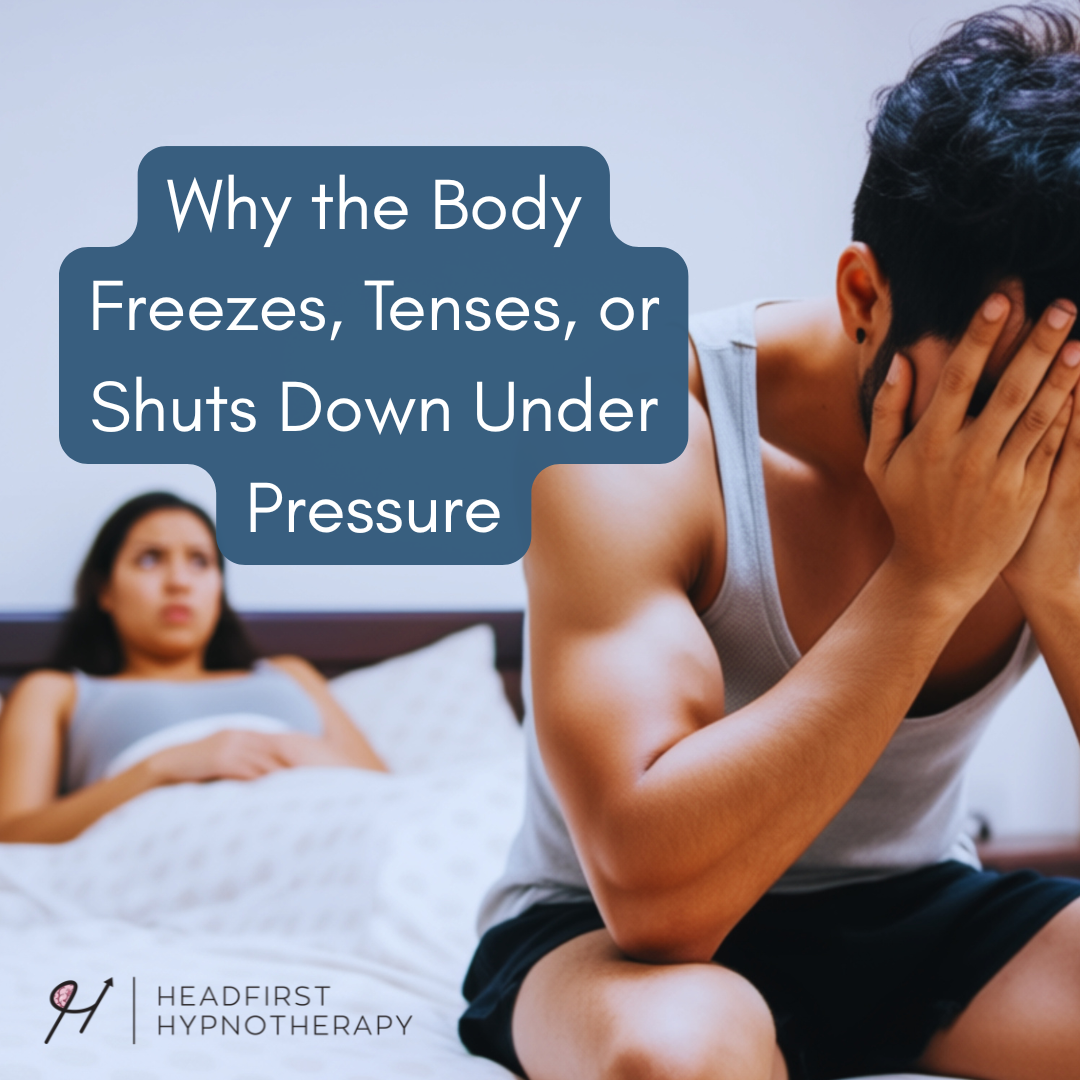
Many people are surprised by how their body reacts when pressure is high. At moments when they want to feel calm, focused, or confident, the opposite seems to happen. Breathing becomes shallow, muscles tense, thoughts scatter, or familiar abilities feel suddenly unavailable.
This can be unsettling, especially for people who generally cope well and are used to functioning under responsibility. It often shows up during work presentations, exams or interviews, intimate or sexual situations, medical or dental appointments, flying, or any scenario where there is a strong sense of needing to get it right.
Understanding what is happening in these moments can help reduce frustration and self-criticism — and explain why “trying harder” so often backfires.
Pressure Activates the Body’s Protection System
The human nervous system is designed to protect us. When the brain detects threat, risk, or high importance, it automatically shifts the body into a state of readiness. This response is fast, instinctive, and happens before conscious thought has time to intervene.
Pressure alone can be enough to trigger this response. When something feels high-stakes — socially, emotionally, or physically — the brain may interpret that pressure as a signal to protect.
As a result, systems involved in breathing, muscle control, digestion, balance, and focus can change rapidly. These reactions are not chosen and are not signs of weakness. They are automatic protective responses designed to keep the body safe, even if they interrupt comfort or performance.
The difficulty arises when the body starts responding to pressure itself as though it were danger.
Why Forcing Calm or Control Often Makes Things Worse
When the body does not behave as expected, the natural response is to try to regain control. This can involve closely monitoring sensations, mentally rehearsing what should happen, or trying to force relaxation or confidence.
Unfortunately, this extra effort often sends further signals of threat to the nervous system. Increased checking and monitoring keeps attention focused on the body, which can heighten alertness rather than reduce it.
In these situations, the issue is not a lack of ability or effort. It is that the system responsible for protection has become too active.
Situations Where Pressure Reactions Commonly Appear
People often recognise this pattern in situations such as:
public speaking, presentations, or being observed at work
sexual or intimate experiences where performance feels important
medical, dental, or needle-related appointments
flying, confined spaces, or situations that feel hard to exit
exams, interviews, or assessments with significant outcomes
Physical responses may include sweating, changes in breathing, shaking, muscle tension, nausea, or a sudden loss of confidence or focus. These reactions are real, even when the situation itself is objectively safe.
How the Nervous System Learns These Responses
When pressure responses are repeated over time, the nervous system can become quicker to react. It learns from experience and begins to respond automatically to situations that resemble past stress, even when no immediate danger is present.
This can make reactions feel unpredictable and undermine trust in the body. Importantly, this is not a personal failure. These are learned protective patterns shaped by repetition, expectation, and context.
The nervous system is also capable of learning different responses.
How Solution-Focused Hypnotherapy Approaches This Pattern
Solution-Focused Hypnotherapy takes a learning-based approach to these difficulties. Rather than analysing problems or revisiting past experiences, the focus is on what a person would like to move towards and how they want to feel in everyday situations.
Sessions combine focused conversation with guided trance — a natural state of absorbed attention similar to becoming deeply engaged in a book or film. In this state, the nervous system can settle and the mind becomes more receptive to new perspectives and suggestions.
Therapeutic suggestions are used to support the brain in practising alternative responses to pressure, such as allowing the body to settle more easily or noticing safety rather than threat. Over time, these calmer states can become more familiar and accessible outside of sessions.
This is not about forcing change or “positive thinking”. It is about helping the nervous system experience flexibility and safety so different responses become possible.
Moving Forward With Less Self-Blame
When the body does not respond as expected, it is easy to feel embarrassed or frustrated. Recognising that these reactions are protective — not intentional — can help change that narrative.
The body is not working against you. It is responding based on what it has learned about pressure and importance. With the right support, it can learn that pressure does not always require alarm.
Small changes in nervous system responses can make demanding situations feel more manageable, freeing up attention and energy for daily life.
A Note on Scope
Solution-Focused Hypnotherapy is a complementary approach for emotional wellbeing. It does not replace medical or psychological care and is not intended to diagnose or treat medical conditions. Anyone with concerns about their physical or mental health is encouraged to seek appropriate professional advice.
Book your 60-minute Initial Consultation to begin focused, solution-led support

Support with anxiety and wellbeing
I’m Andy Selway-Woolley, a Solution-Focused Hypnotherapist based in Upper Heyford, near Bicester, Oxfordshire. I offer in-person sessions from my local therapy room as well as online hypnotherapy across the UK.
My work focuses on supporting people with anxiety, overthinking, confidence difficulties, sleep-related issues, and related wellbeing concerns using a calm, practical, solution-focused approach.
I’m a registered and accredited member of Complementary & Natural Healthcare Council (CNHC), Association for Solution Focused Hypnotherapy (AfSFH) and National Council for Hypnotherapy (NCH).
You can view the full range of areas I support on my website.
If you’d like to explore whether solution-focused hypnotherapy feels right for you, you’re welcome to get in touch or book an initial consultation.